
@walter-smith
- Followers 0
- Following 0
- Updates 1
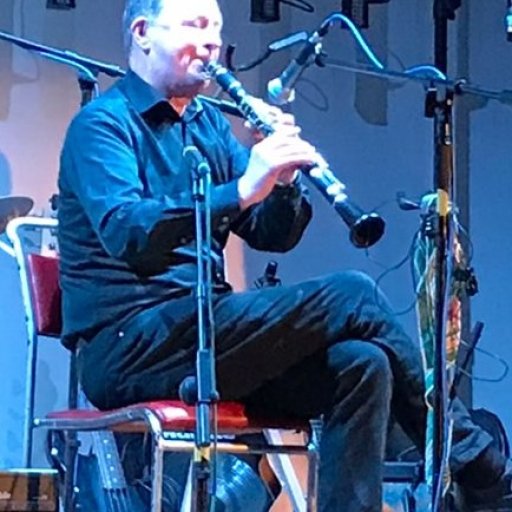
Walt Smith – came to prominence in the mid 70’s as the jazz clarinettist with Mike Hart’s New Society Syncopators in Edinburgh. Known over the years for his “animated, intense playing” today Walt leads the Storyville All Stars as well as his Django Reinhardt inspired group Havana Swing. Walt has also featured with the Dundee based East Coast Jazzmen, the Milenburg band based in Fife, the Scottish showband Spatz and Co., as well as many small jazz groups.
Walt highlights his involvement with Havana Swing as being the closest he has ever been to emulating the swing groups that formed his early listening : Benny Goodman quartet, Artie Shaw’s Gramercy Five, Tommy Dorsey’s Clambake Seven etc. The ability to solo in front of talented musicians that are both able to provide competent timing and accurate chord patterns is a joy.
Apart from jazz festivals Walt spends part of his holidays attending the Jazz Summer School and professional jazz performer courses at the Royal Conservatoire of Scotland in Glasgow.
Poor Butterfly (Raymond Hubbell) played by Walt Smith of the Storyville All Stars

Duration: 00:03:10
Description:
LIVE from Discovery Point, Dundee on Saturday 24th October 2009
"Poor Butterfly" is a popular song. It was inspired by Puccini's opera Madame Butterfly and contains a brief musical quote from the act 2 duet Tutti i fior in the verse.
The music was written by Raymond Hubbell, the lyrics by John Golden. The song was published in 1916. It was introduced in the Broadway show The Big Show, which opened in August 1916, and was sung in the show by Sophie Bernard[1].
The song became a pop standard, recorded by many artists.
Biggest hit versions in 1917
The two biggest hit versions in 1917 were recorded by Elsie Baker (using the pseudonym Edna Brown) and by the Victor Military Band[1].
Baker's recording was made on December 15, 1916 and released on Victor as catalog number 18211[1], with the flip side being a recording of "Alice in Wonderland" by Howard & McDonough[2].
The Victor Military Band recording was recorded on November 29, 1916 and issued by Victor as catalog number 35605[1][3], with the flip side Katinka.
Another version which received a significant amount of popularity[1] was by Grace Kerns recording under the name Catherine[4] (or Katherine[1]) Clark. This version was recorded in November 1916 and released by Columbia Records as catalog number A-2167, with the flip side Century Girl[4].
Somewhat less popular, but still noted at the time, were a recording by Elizabeth Spencer, released by Thomas Edison's recording company as a disk, catalog number 50386, and an Amberol cylinder, catalog number 3039[1], and a recording by Prince's Orchestra[3] (or Prince's Band[5]), recorded December 1916 and released by Columbia Records as catalog number A-5930, with the flip side You and I[5].
[edit]1954 revival
The song was revived in the 1950s by The Hilltoppers for a top-20 chart hit. Their recording was released by Dot Records as catalog number 15156, with the flip side "Wrapped up in a Dream". It first reached the Billboard magazine Best Seller chart on April 14, 1954 and lasted 5 weeks on the chart, peaking at #15[6]. (Other sources[7] give the first date on the chart as April 24 and the highest position as #12.) The same recording was released in Canada by Quality Records as catalog number K1235, with the same flip side[8].
[edit]Other recorded versions
Herman Chittison Trio (recorded February 2, 1945, released by Musicraft Records as catalog number 323, with the flip side These Foolish Things[9])
Arnett Cobb and his orchestra (recorded June 14, 1953, released by Mercury Records as catalog number 70101, with the flip side Congratulations to Someone[10])
Columbia Saxophone Sextette (recorded January 24, 1917, released by Columbia Records as catalog number A-2203, with the flip side Katinka: Allah's Holiday[4])
Hank D'Amico Sextette (released by MGM Records as catalog number 10641, with the flip side If Dreams Come True[11])
Guido Deiro (recorded January 1917, released by Columbia Records as catalog number A-2202, with the flip side Madame Butterfly[4])
Deanna Durbin (released by Decca Records as catalog number 18297B, with the flip side Annie Laurie[12])
The Ebon-Knights (released 1958 by Stepheny Records as catalog number 1817, with the flip side "The Way the Ball Bounces"[13])
Emerson Symphony Orchestra (recorded January 1917, released by Emerson Records as catalog number 7123, with the flip side Shadowland[14])
POOR BUTTERFLY lyrics:
Theres a story told of a little Japanese
Sitting demurely neath the cherry blossom trees
Miss Butterflys her name
A sweet little innocent child was she
Till a fine young American from the sea
To her garden came
They met beneath the cherry blossoms every day
And he taught her how to love the American way
To love with a soul twas easy to learn
Then he sailed away with a promise to return
Poor Butterfly neath the blossoms waiting
Poor Butterfly, for she loved him so
The moments pass into hours
The hours pass into years
And as she smiles through her tears
She murmurs low
The moon and I
Know that hell be faithful
Im sure hell come to me by and by
But if he wont come back
Then Ill never sigh or cry
I just must die
Poor Butterfly
